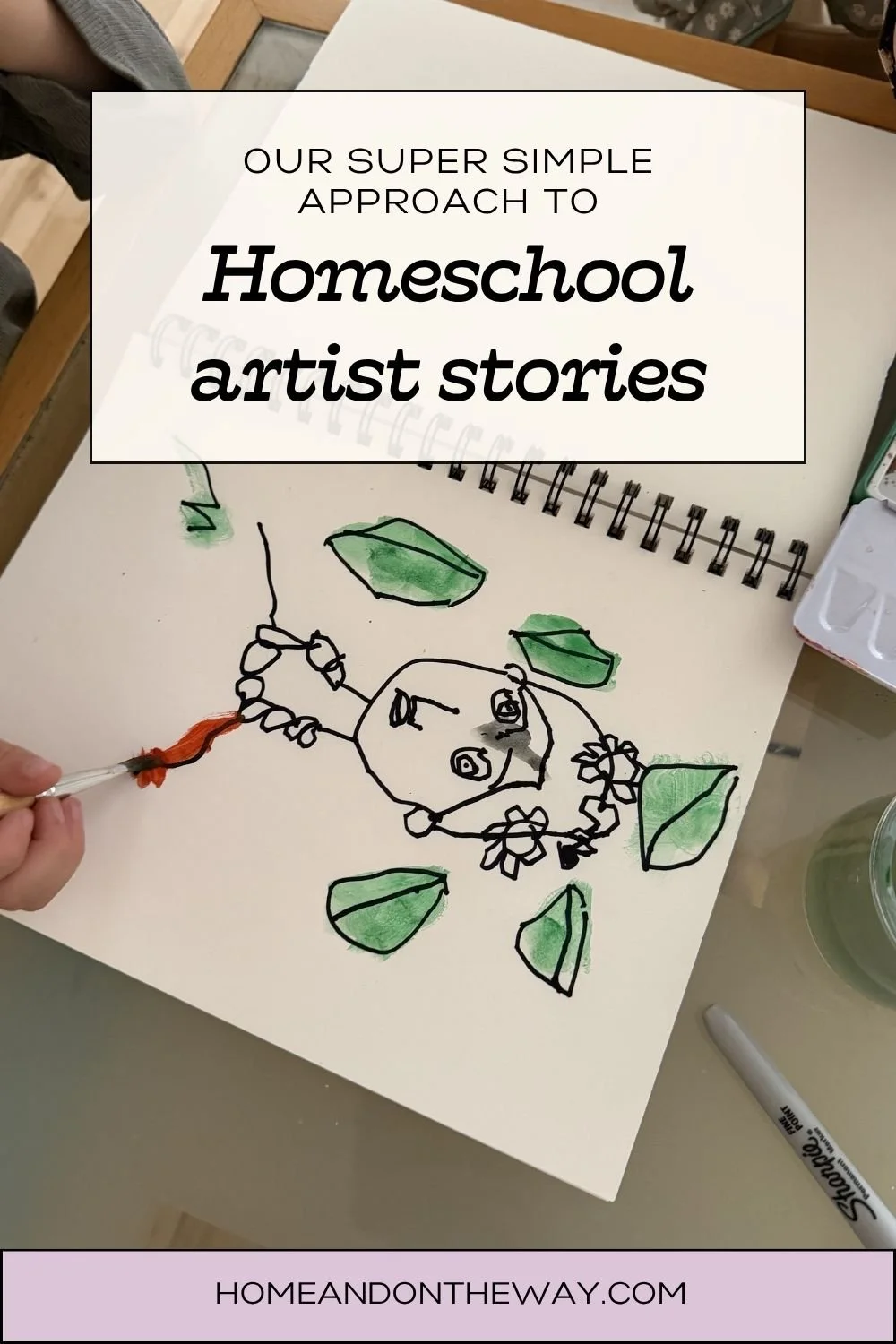
Our Super Simple Approach to Artist Studies
This post may contain affiliate links, which means I may earn a small commission if you buy through my link but does not change your price.
One goal I have had for my children’s education is to give them a more rounded education than I received. I am embarrassed to admit that my own knowledge of art history is very, very limited. The art program in my elementary school was cut when I was in first grade; art was not taught except as an elective in high school; and my school never taught art history. By college, I was too intimidated to take art history because I lacked any background in it. I feel privileged to have the opportunity now to learn alongside my children.
I knew that in our homeschool, I wanted to teach about art and artists, but it took us a bit of adjusting to find an approach that works. Often, among all the different things we were doing, this piece would get lost. I would be trying to do too much when we did do an artist study, do it only very occasionally, and then skip for months. I realized I was placing too much pressure on what was learned for each artist study. My children are 5, 3, and 1. I don’t need them to have memorized a bunch of dates or anything like that. This year, I finally found a super simple approach to artist studies that works in our home.
Our Approach to Artist Studies
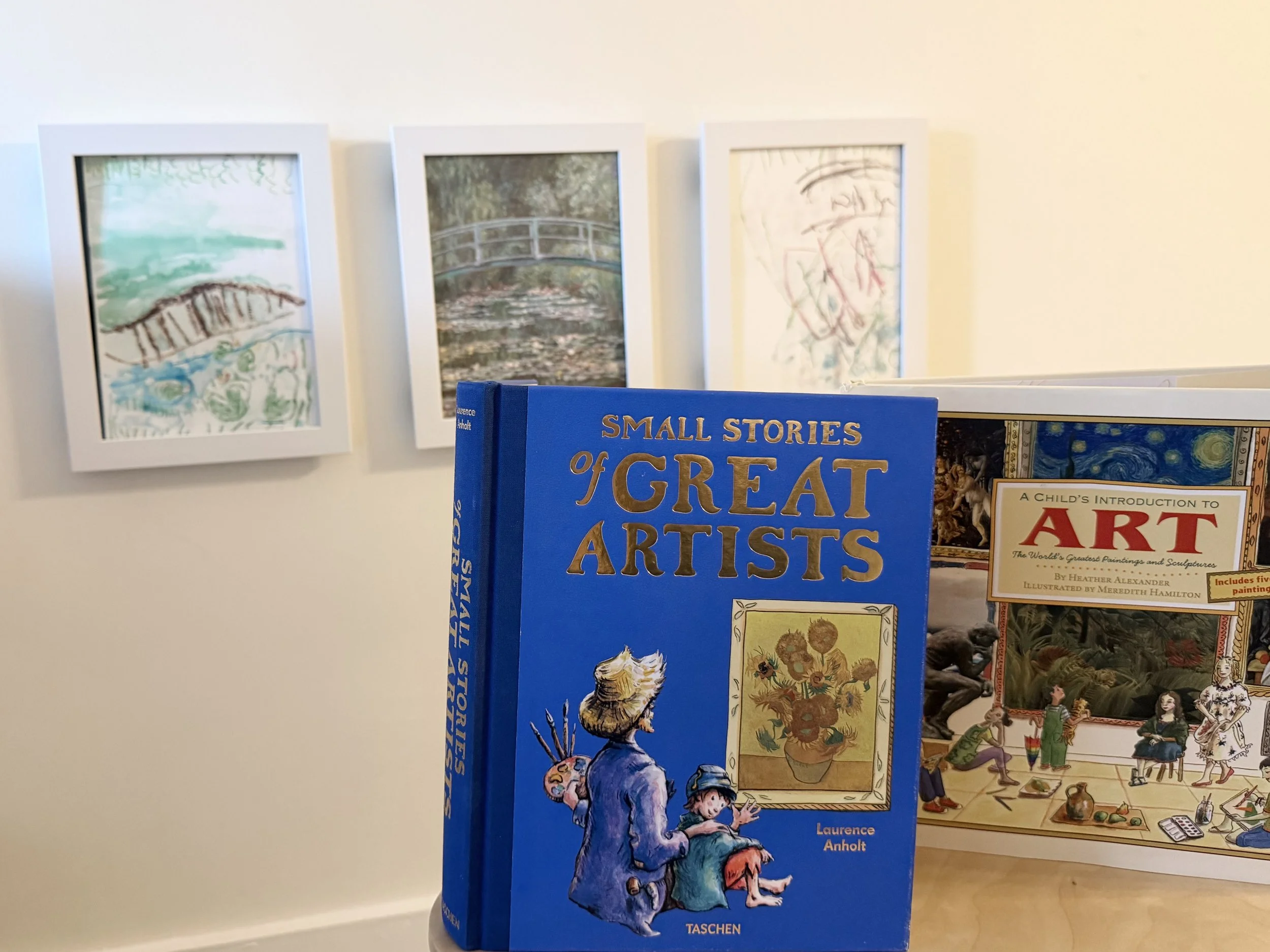
The first step in all our artist studies is to read about the artist. I do this during tea time. We have a snack and some tea, and this is when I often do these more enrichment-type lessons. I tell my children we are doing a new artist, share their name, and a bit about some of their famous works. I make sure I have a few good images of their art for my children to study. Then, I read to them about the artist. I particularly like this Small Stories of Great Artists book because it is a narrative, versus just facts about the artist. The stories in it do a good job of capturing who the artist was and the type of art that made them famous. I also read the part in the back that shares more facts about the artist. If we are studying an artist who is not included in that book, I try to find another book that offers a narrative. Some examples of books like this that we have are Henri’s Scissors and My Hands Sing the Blues. That said, I used the Small Stories book as a way to guide which artists I chose for the first several. I find my children connect more to stories about the artists from living books than to me just reading a list of facts.
That usually captures day one of our artist study. On day two (which isn’t necessarily the next day, but is often later in the week!), I read a bit more about the artist. This is where I pull out some of my nonfiction art books. These books include:
Each of these books shows pictures of the art and gives a little bit of information about the artist. They are not as engaging as the Small Stories of Great Artists book, but they explain the importance and history of each artist well for young children.
Then, we do art inspired by the artist! Our approach to this has varied a bit depending on the artist, as we have found what works for our family. I always offer materials and some guidance. However, over time, we have switched to using some online videos that give art lessons. I am very careful about the use of technology in our home, and we do not use it often. If anything, we don’t use it enough. This is one place, however, where I have found using technology to be a huge value add. We start by discussing one painting that will inspire our art and noticing things in it. Then, we start our own art. For videos, I always pre-vet them before we watch them. I do find it so frustrating that they are all on YouTube Kids and thus don’t have comments! I would love to hear what other educators think about the video (such as what grade they used it with). For us, I avoid any videos that have loud background music or that seem too complicated for my young kids. I have loved seeing what my two different children create for each piece of art. I always create alongside them.
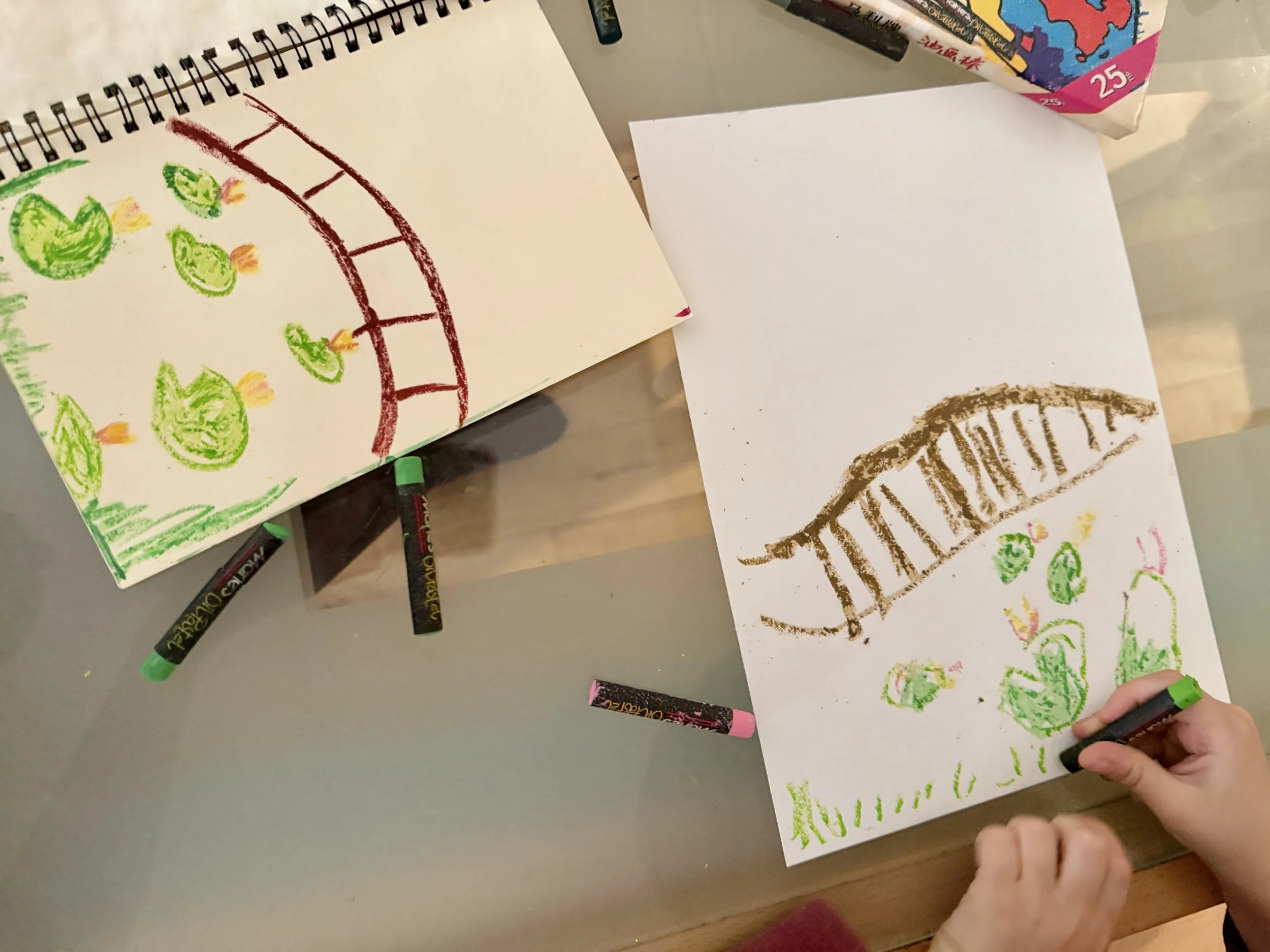
We don’t always use videos, but I always make sure to offer some guidance as we do this art project. For example, for Van Gogh, we did Starry Night. We did monoprinting, inspired by someone I saw on Instagram. We discussed how he used swirls in his art and the different colors he chose to depict the night sky. My children can make their own choices, but I want those choices to be guided by our discussion of the artist.
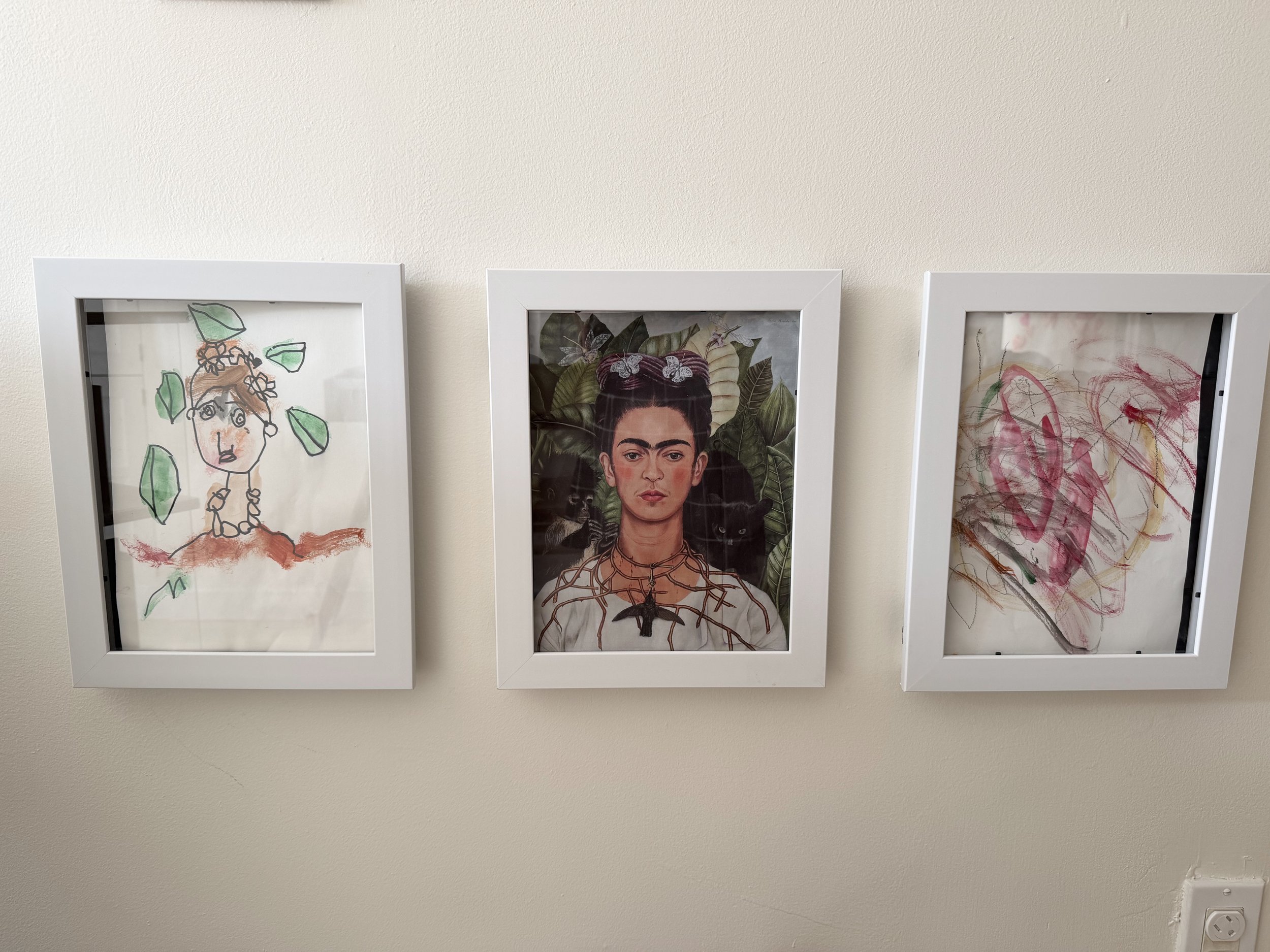
After our art dries, I place it in our easy-to-change frames in the living room! I have three frames there. I place a copy of the artist's work we are learning about in the middle, with their art on either side. This makes them feel so special about the art they put work into. It also displays the artist’s work as a reminder of what we learned. We discuss who the artist is again from time to time, both looking at the art there and over tea.
Finally, since we live in New York City, I try to bring them to see the art in person. Admittedly, this doesn’t happen every time, but it is something I try to do. Seeing the art in full-size and recognizing art they learned about in a museum is powerful!
That’s it, that’s a look at our super simple approach to homeschool artist studies. Let me know if you have any questions or if you do something similar!