Best Math Games Toddler to 1st Grade
This post may contain affiliate links, which means I may earn a small commission if you buy through my link, but it does not change your price.
A bit ago, I heard the word “gameschooling” from my friend, Everyday With E and J. I fell in love with the term. We love board games here and, particularly when it comes to math, they are a wonderful way to practice skills. For toddlers and young children, games can be one of the best ways to teach and practice math! This blog post will share some of the best games to practice math skills for toddlers through early elementary.
I have roughly divided this page into grade levels for toddlers through first or second grade. It’s not set in stone, and I definitely recommend looking outside of your child’s age. Since my own son is gifted, we go outside of age ranges a lot. He is currently following an advanced 1st-grade level curriculum at 4, but can play many games for older children than that. I have based the game categorizations on the skills I have seen taught in each grade level we have gone through. A younger child may be able to play a game for a higher grade level, but I grouped them where I saw the curriculum particularly focusing on the skill the game focused on. At the same time, my son still loves the math games that work on preschool or even toddler skills. There’s no reason to constrain yourself! Note that I included games that work on number recognition and counting in the preschool section. However, that is covered at the beginning of Kindergarten as well. If you are looking for the best toddler math games, preschool math games, or elementary math games, keep reading!
Toddler Math Games
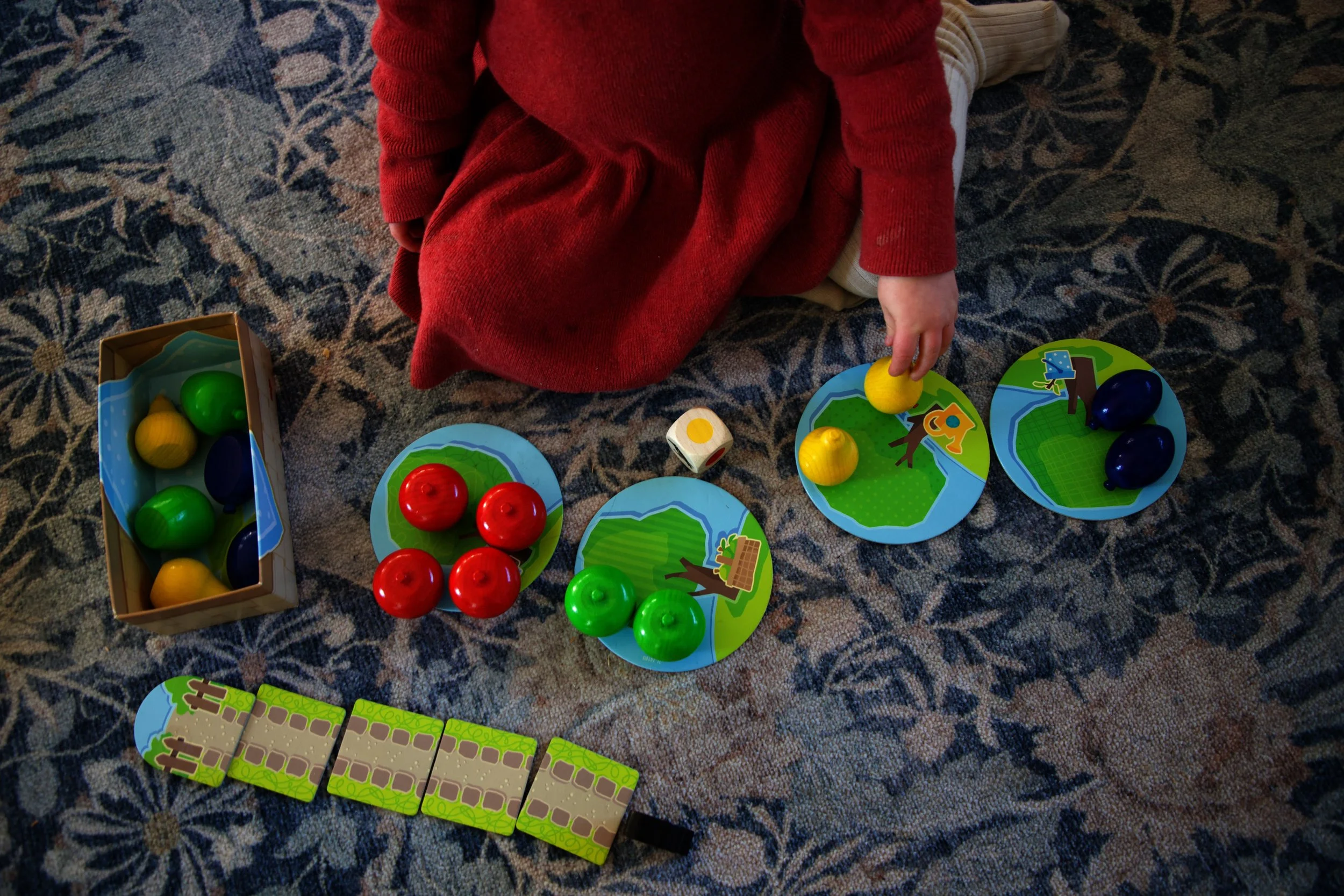
First Orchard: This is one of my absolute favorite first games for toddlers. It works on color recognition and offers a lot of other math opportunities. Use it to discuss more and fewer (how many of each fruit are left), create number sentences (3-1 is 2!), and one-to-one correspondence.
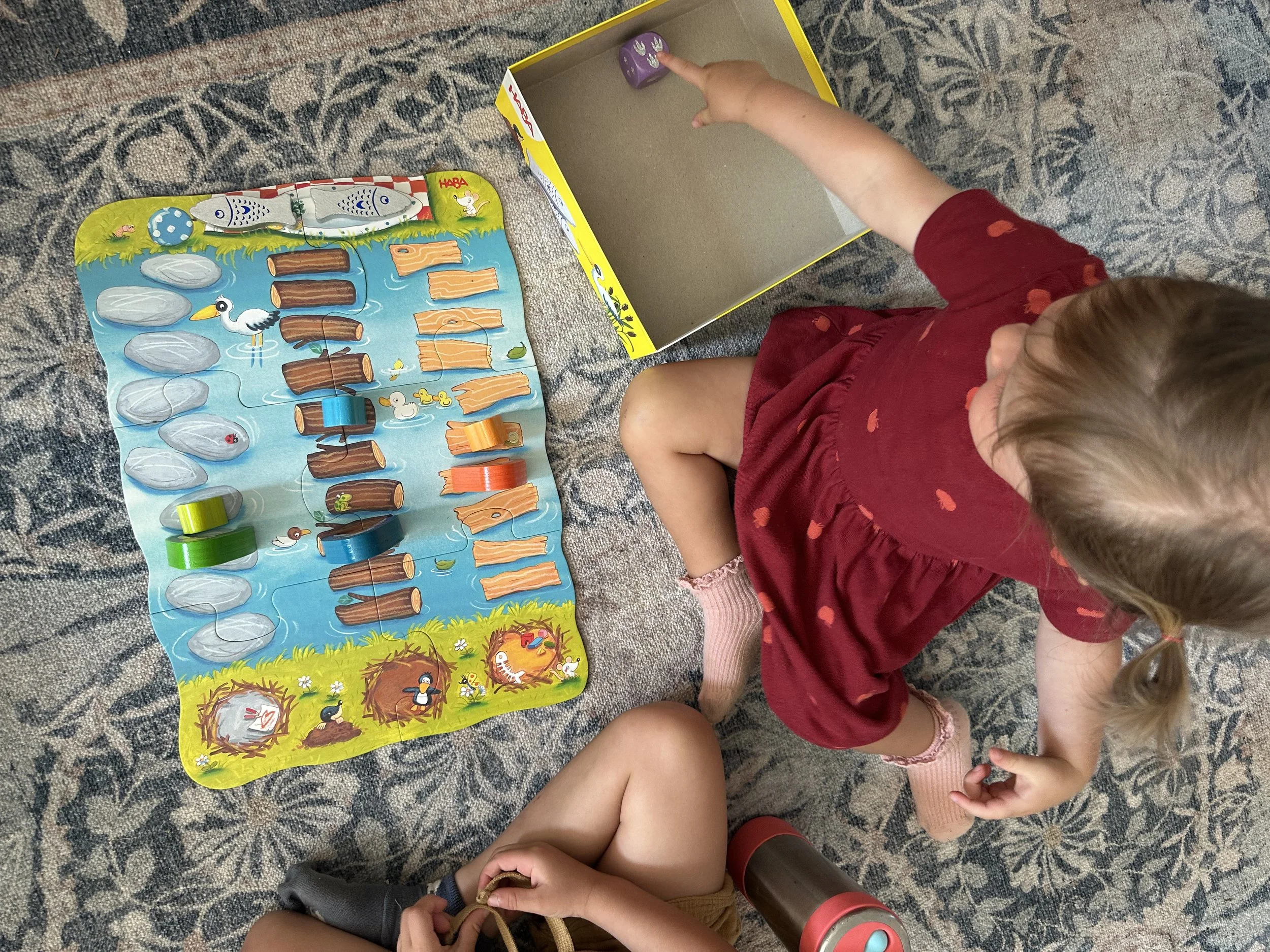
Go Go Little Penguin: This game works with small numbers and is perfect for toddlers. They work on differentiating between big and small, and counting and moving on a board up to 3. Moving on a board with one-to-one correspondence is more of a challenge than you may imagine, and this game is a great introduction.
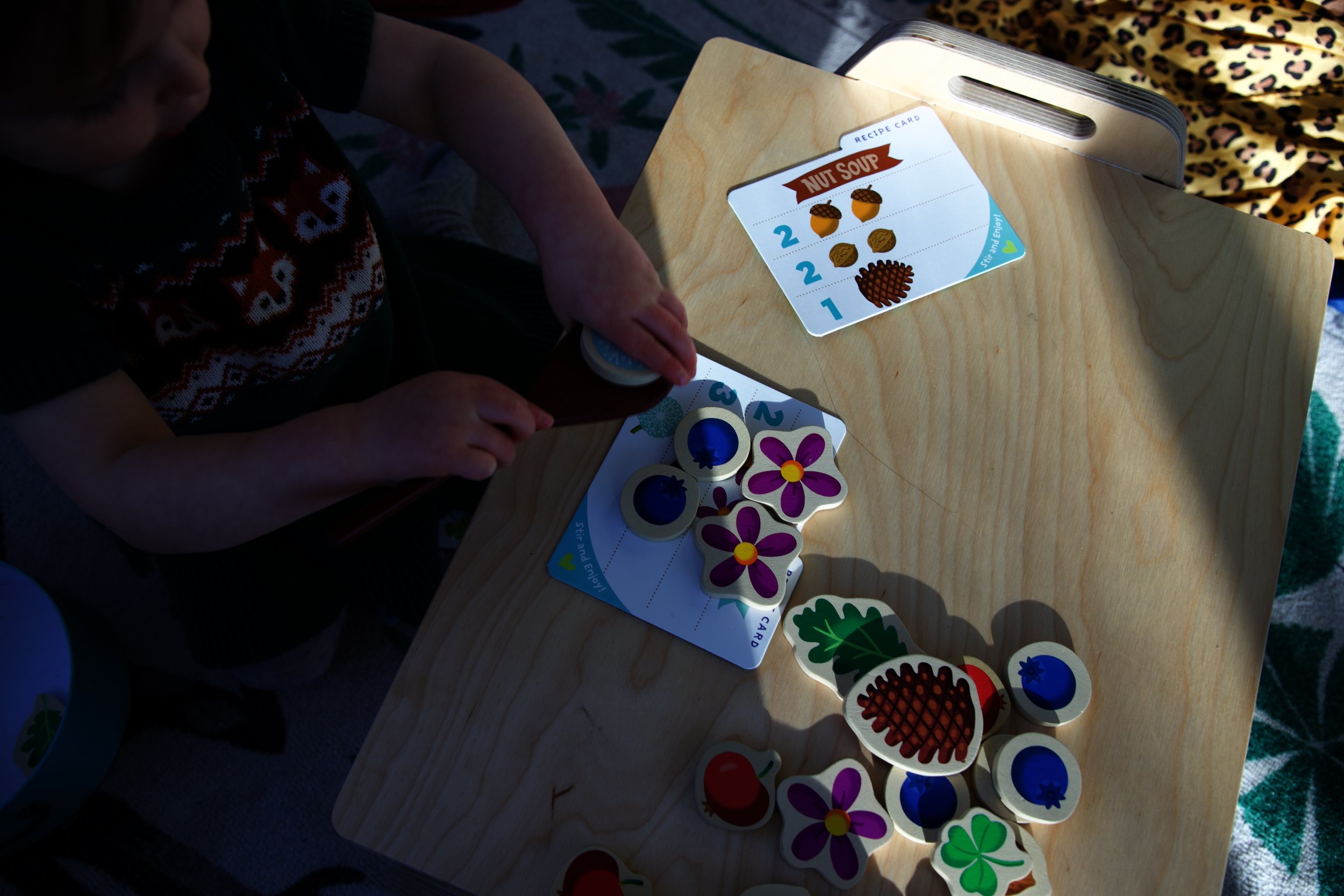
Acorn Soup: This is another game that works with small numbers and is perfect for toddlers. It practices both counting and number recognition as you follow recipes to make different soups. Each soup has 1, 2, or 3 of each ingredient. Children can count how many on the recipe and/or look at the written numeral. Toddlers then add it to the pot.
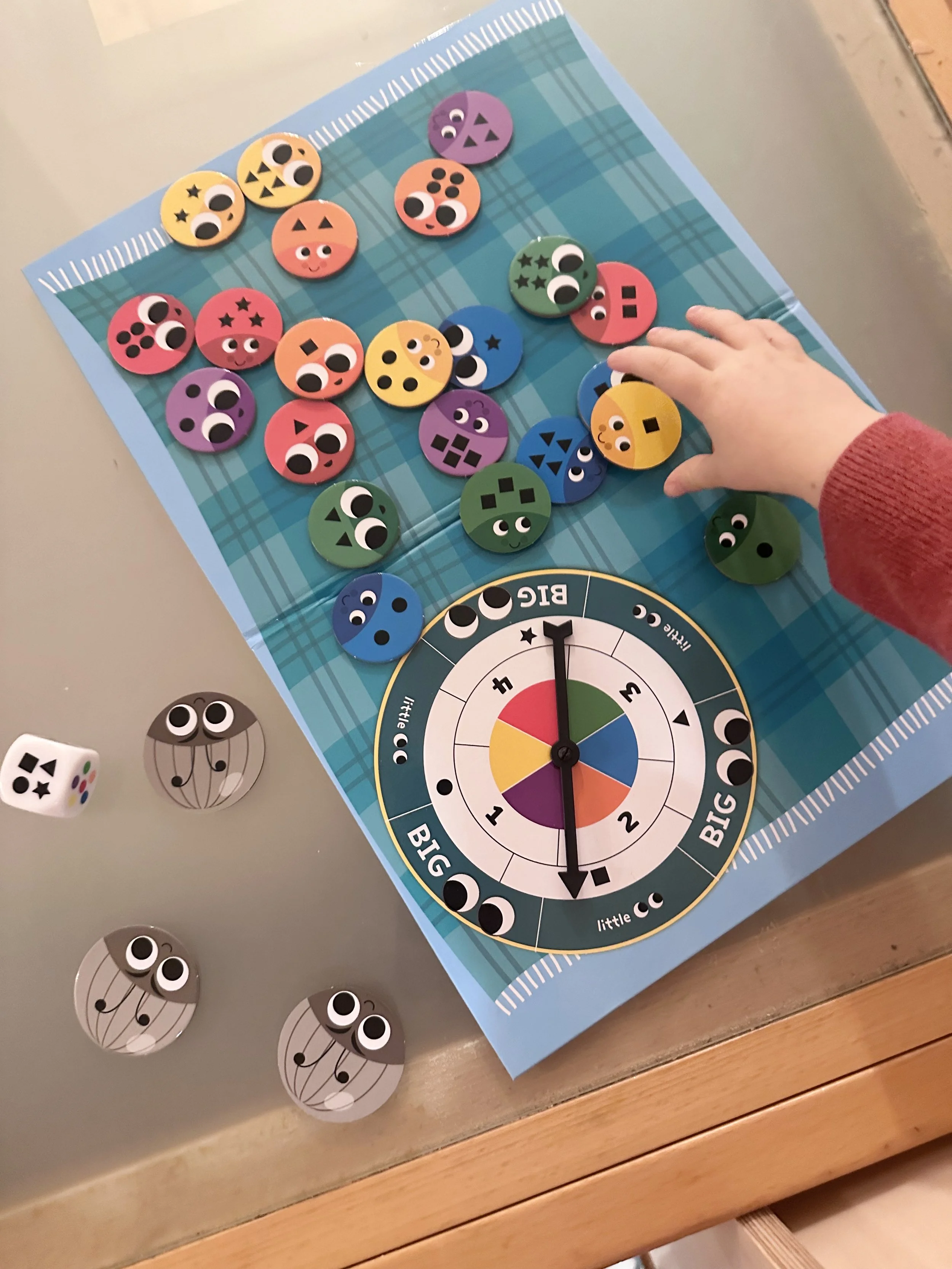
Snug as a Bug: This toddler math game works on numbers, colors, shapes, and size discrimination. It is incredibly simple, though you can level up the play for older children with their 3 levels of rules. It is a cooperative game.
Preschool Math Games
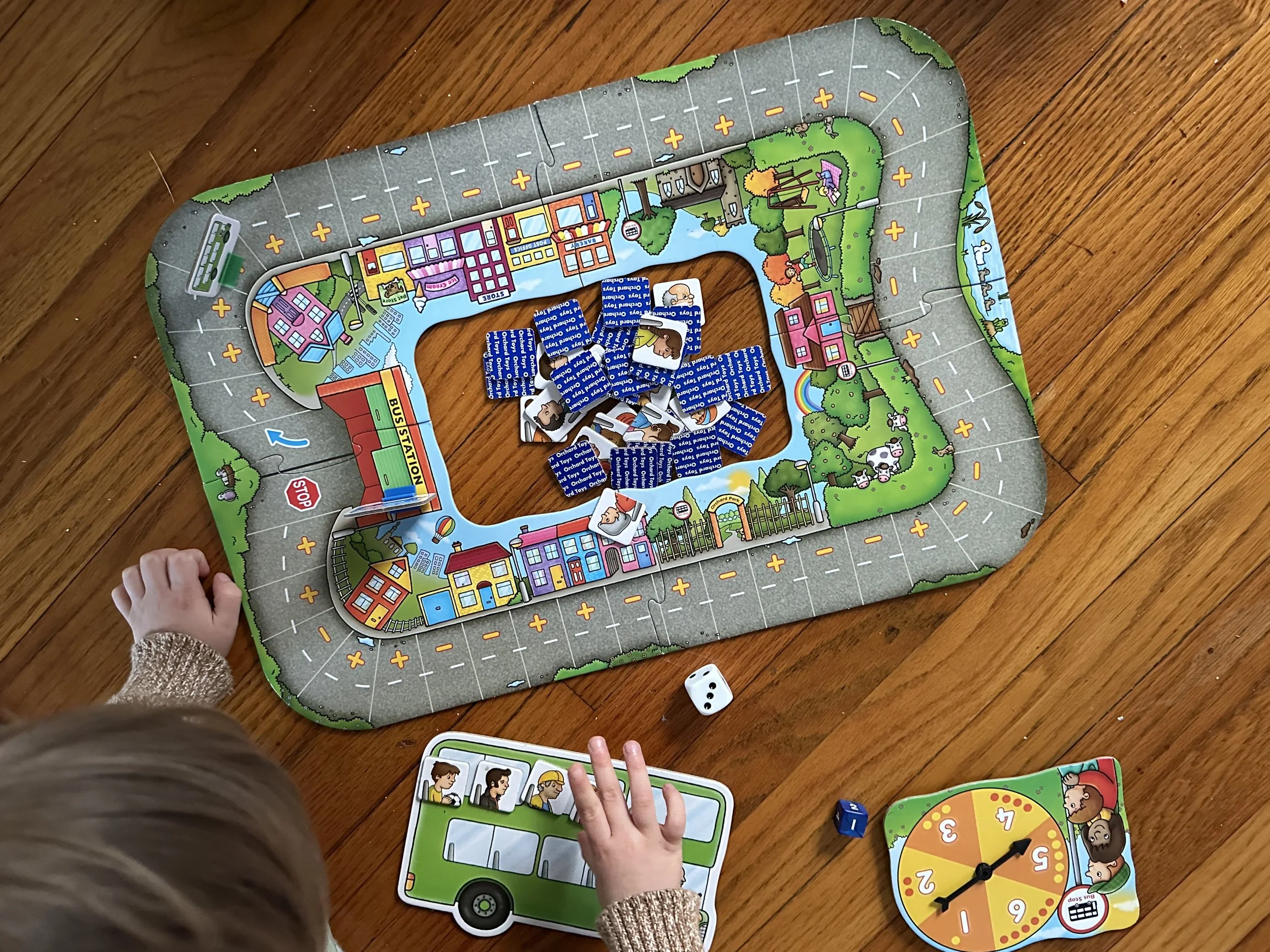
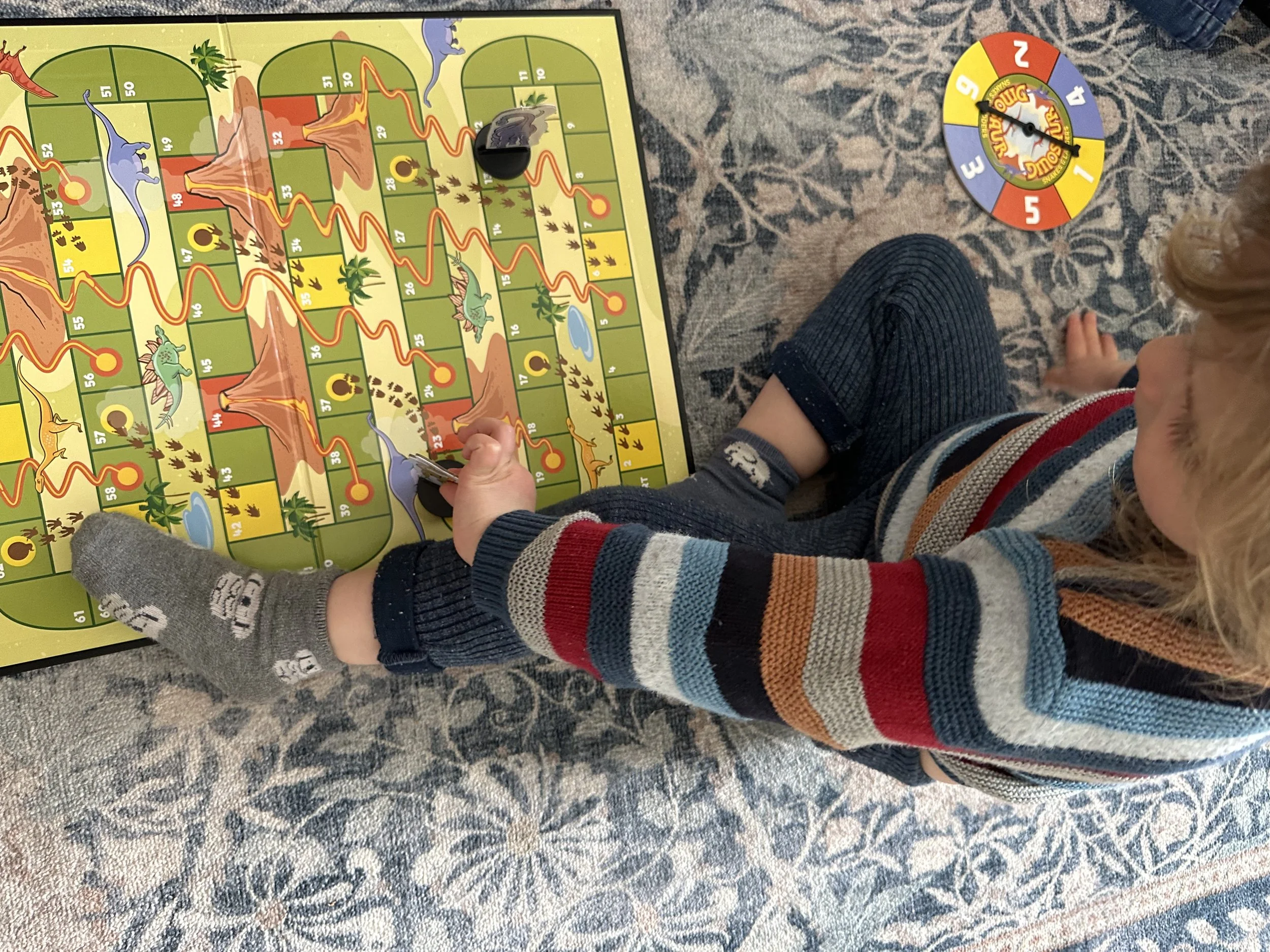
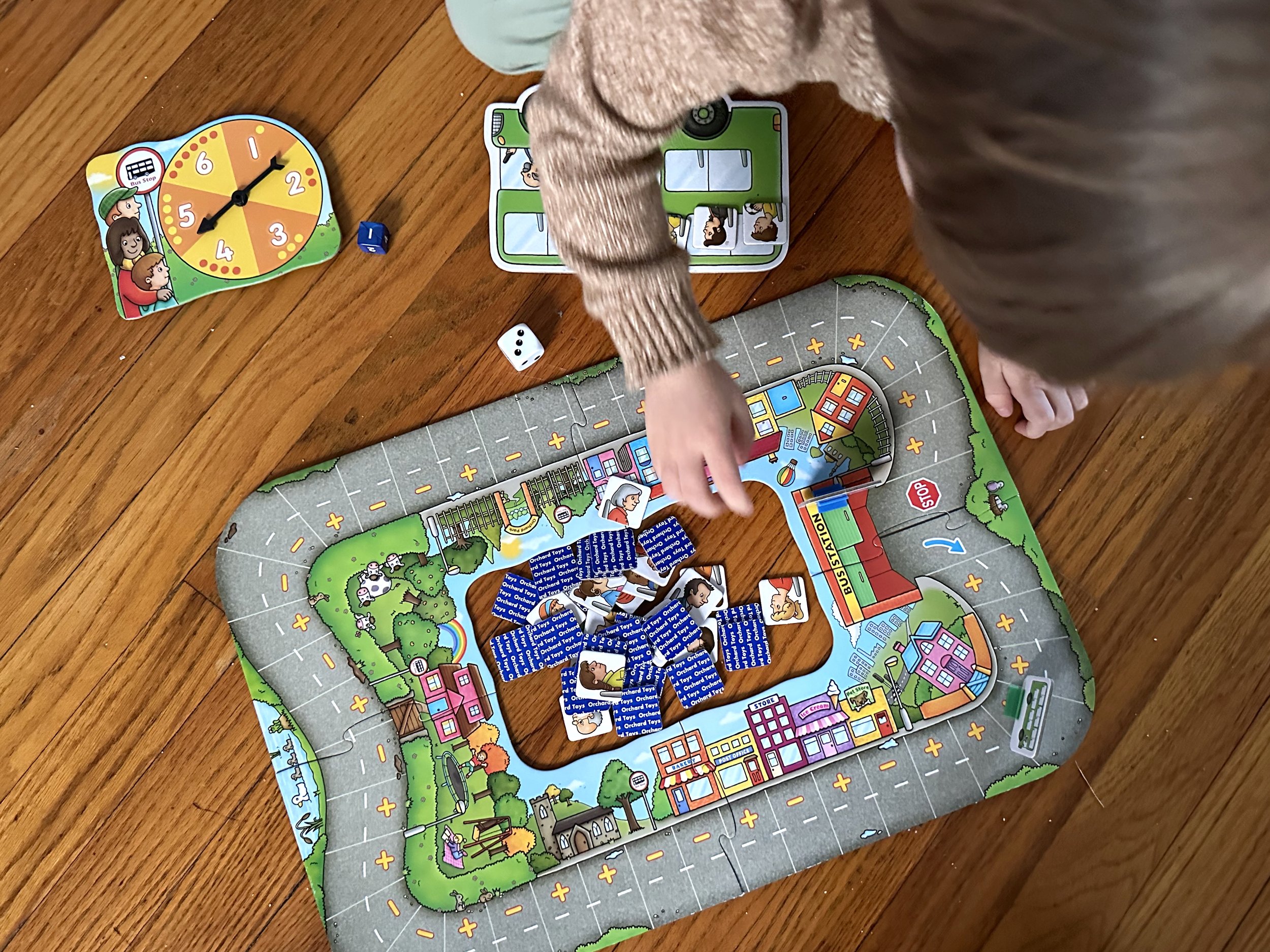
Bus Stop: This game is designed as a playful introduction to addition and subtraction for preschoolers. Children roll a die for how many spaces they will move. They move those spaces and land on an addition or subtraction sign. They then spin the spinner for how many people will get on or off their bus. This teaches the operations signs. As with many games, I look for opportunities to extend. For example, we added a second die to work on addition with the counting on strategy. We also would say the number sentence as people got on and off, “4 plus 3 is seven,” for example.
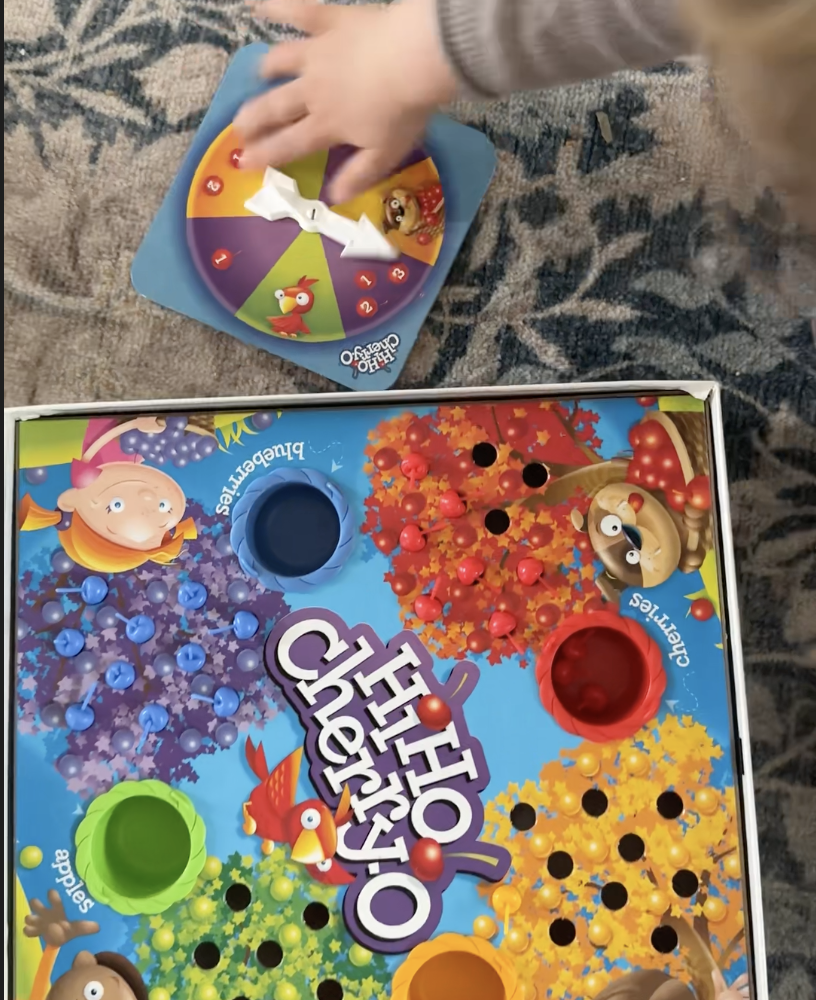
Hi Ho Cherry O: This game works on recognizing small numbers. Spin the spinner to see if you should add 1, 2, 3, or 4 fruits (or lose some or all!). Preschoolers also get practice moving the fruits with one-to-one correspondence. I used this as math practice with my 2-year-old as well, but I put it in the preschool section because the parts are incredibly small.
Chutes and Ladders: This board serves as a hundred board, offering a lot of math opportunities! Chutes and Ladders works with slightly bigger numbers than some of the other preschooler games, with numbers up to 6. Children work on recognizing the numbers and then moving along the hundred board with one-to-one correspondence. There are lots of opportunities to speak math, saying the equations as you spin and move, or pointing out what number you are on.
Numbers Bingo: Numbers Bingo offers a good opportunity to practice recognizing both written numerals and counting quantities. It is more of an explicit math teaching game than some of the other games, but preschoolers will generally still love it. My main issue with it is that I think it would be better for children if it were reversed, with the written number on the board and the quantity you pull out. This would make it easier for children learning numbers.
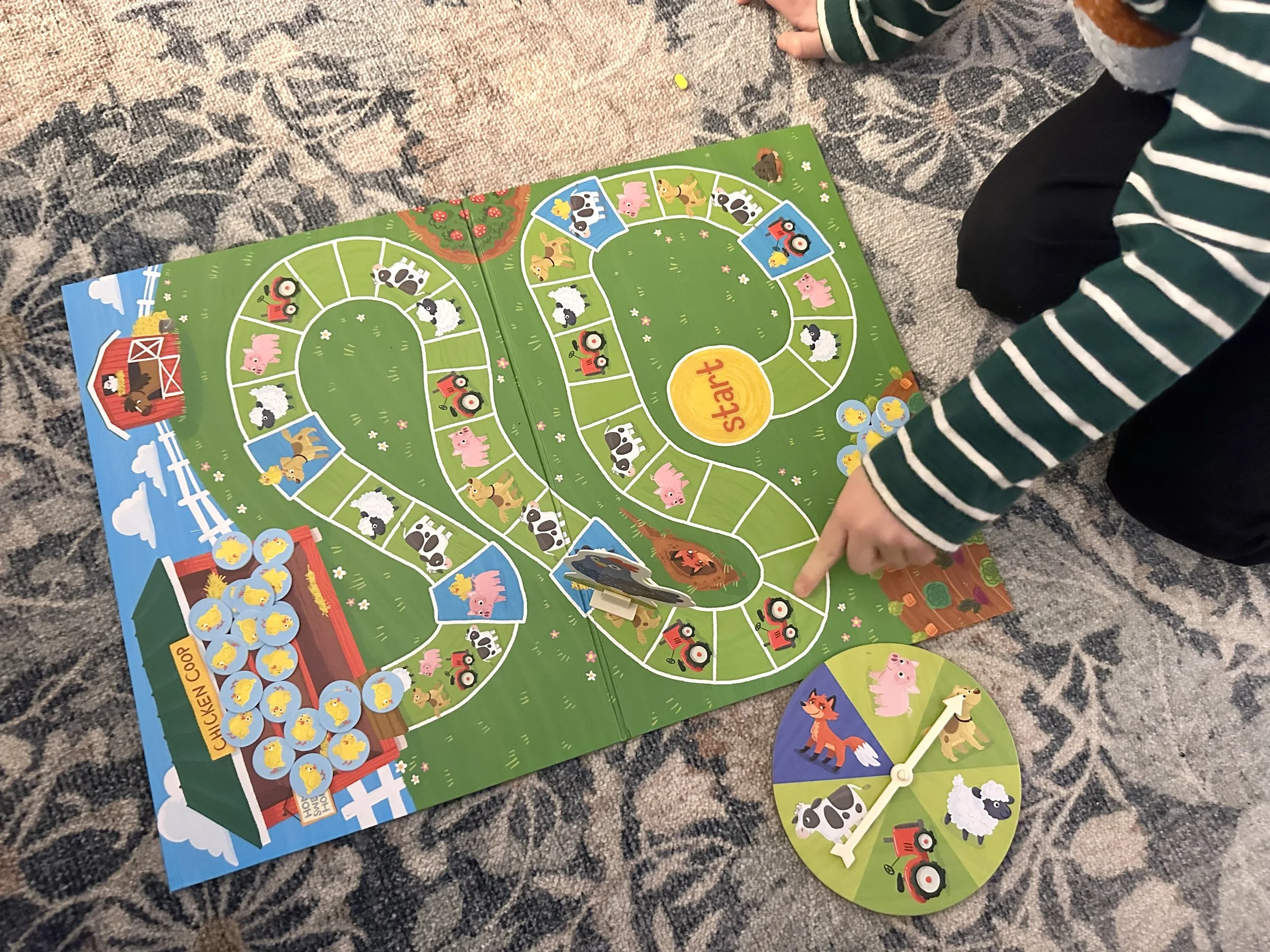
Count Your Chickens: This is a really cute math game for preschoolers that works with some larger numbers! Here, preschoolers spin to determine where they will go and then count the spaces they pass. They then put that many chickens into the coop. Numbers can go up to somewhere around 16, I believe. This game does a good job of practicing counting with one-to-one correspondence, both as you move and as you count out the chickens.
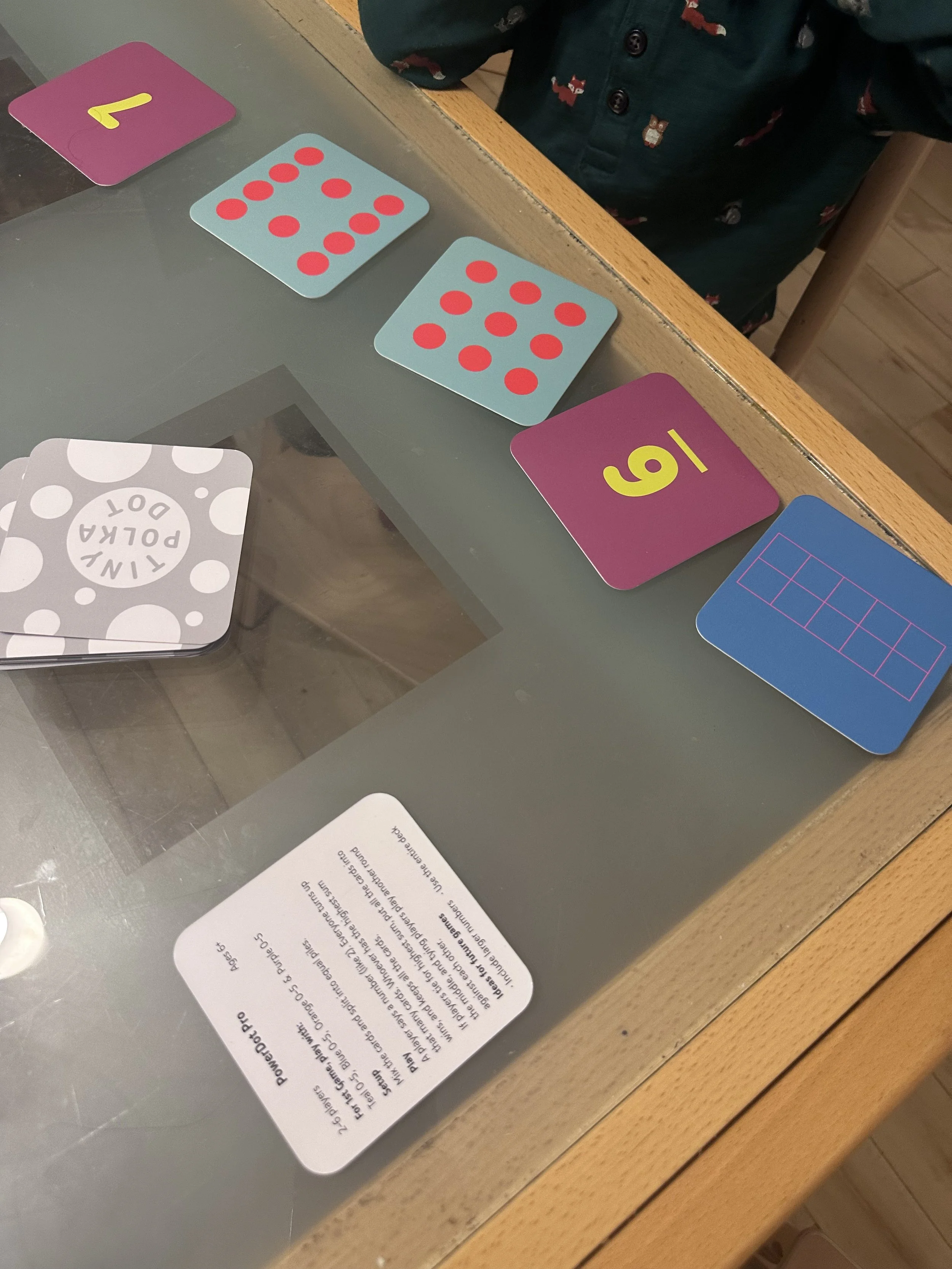
Tiny Polka Dot: This isn’t one game but a set of cards with so many ways to play. This game can support math skills from preschool on up. For a starter game, we played it like memory match with pairs upside down. We would uncover two in hopes of matching a pair. You can choose which cards to use for this. I love a ten-frame in particular to practice subitizing. As I mentioned, there are many ways to play this game, and the instructions cover a lot of options. Seeing numbers in all sorts of different ways is incredibly helpful for preschoolers and elementary students.
Numbers Zingo: This is similar to numbers bingo, and if you have played any type of Zingo before, it is the same idea. Children work on identifying numbers in written form and through counting or subitizing as they try to be the first to make a match from their board.
Kindergarten Math Games
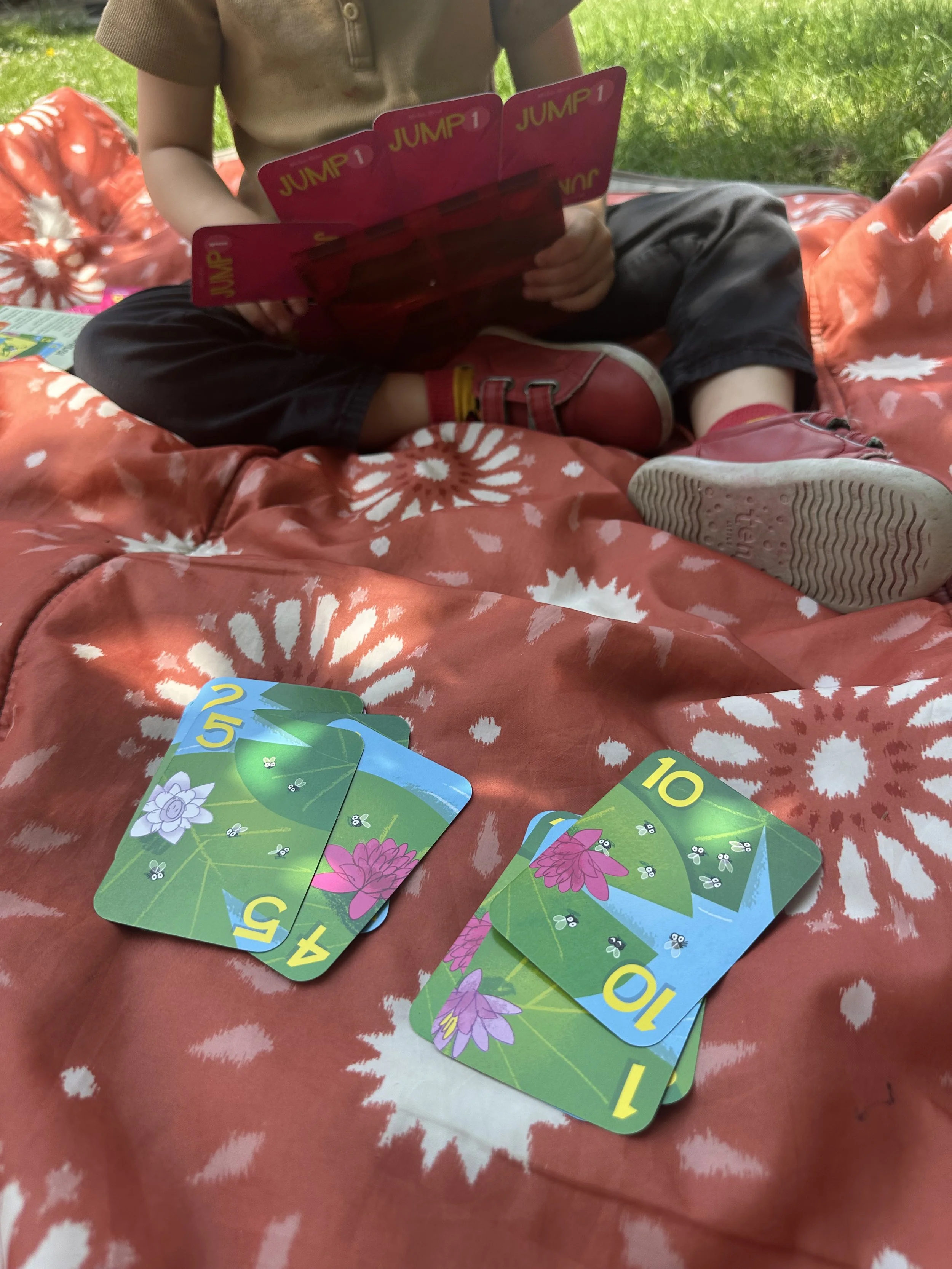
Jump 1: Children practice going up and down by 1 in this game. There are two different ways to play as children get more comfortable with the game.
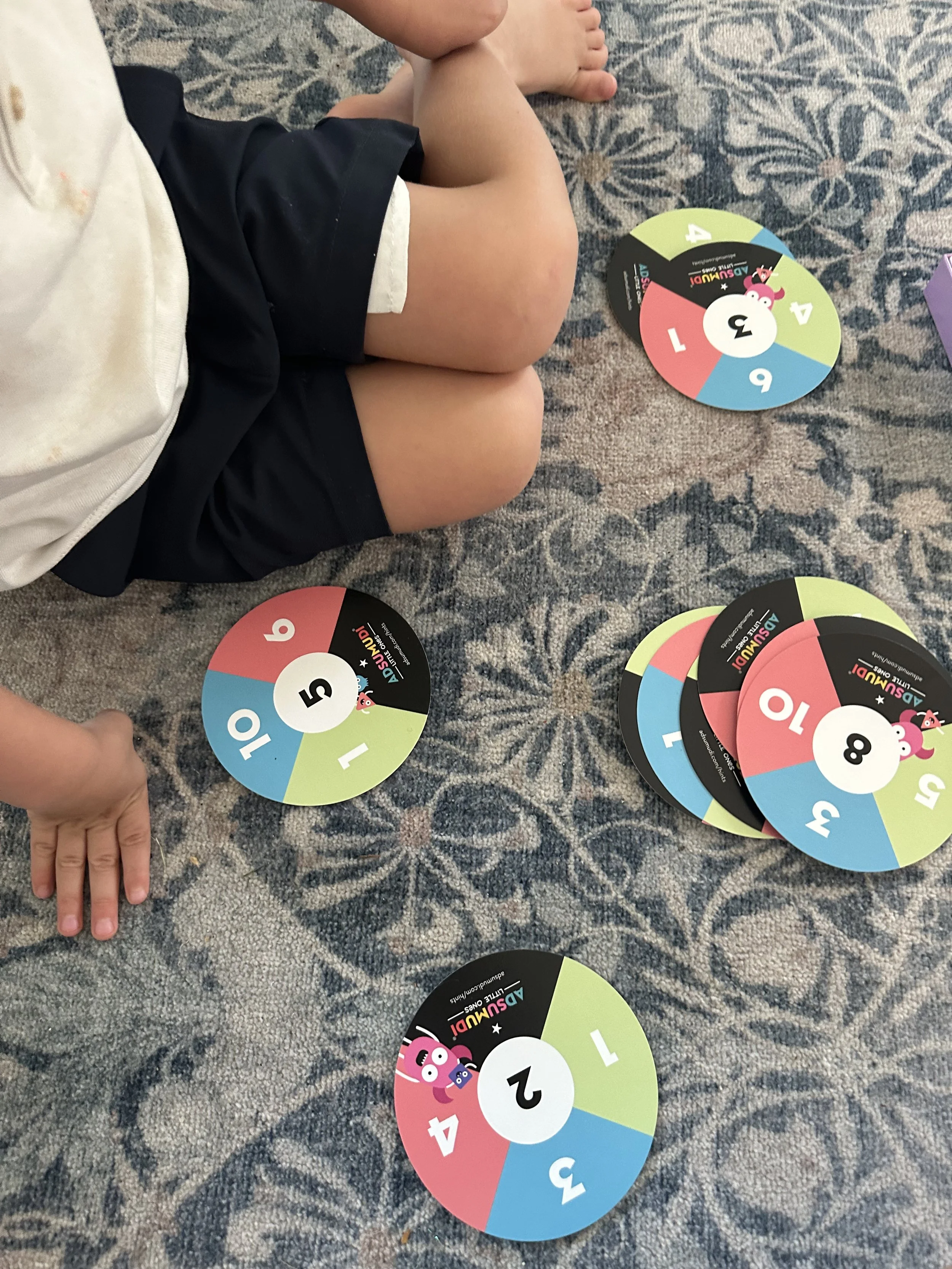
ADSUMUDI Little Ones: This mental math game practices using two numbers to add or subtract and make the middle number. I grouped it under kindergarten games and the higher-level one under first grade. However, it does require more mental math skills than every kindergartener will have. A child needs to be able to add and subtract in their head with some skill. There are different levels within the cards, though, so you can get started with some of the easier ones. I love the mental math work going on in this game. The one issue with this game and a few others like it, however, is that it is solely skill-based. Without an element of chance, the faster person (certainly the adult!) will win every time. While I am not a proponent of letting children win games in general, I do slow myself down during games like this, particularly at first.
Sum Swamp: This is a favorite Kindergarten-level math game where children practice addition and subtraction with two six-sided dice. Practice with odds and evens is also built in.
Tiny Polka Dot: I am also including this game in kindergarten. The truth is, it probably has more uses in kindergarten than preschool. As I mentioned earlier, there are so many ways to play this math game. It is a very versatile way to work on math in preschool, kindergarten, and beyond.
Clumsy Thief Junior: Clumsy Thief is such a fun math game. In the original, you add to 100, but in the Junior version, you add to 10. This is perfect for children at the Kindergarten math level. Players make stacks of “money” to the target number and throughout the game continue adding to their stacks, creating more number bonds to that number.
1st and 2nd Grade Math Games
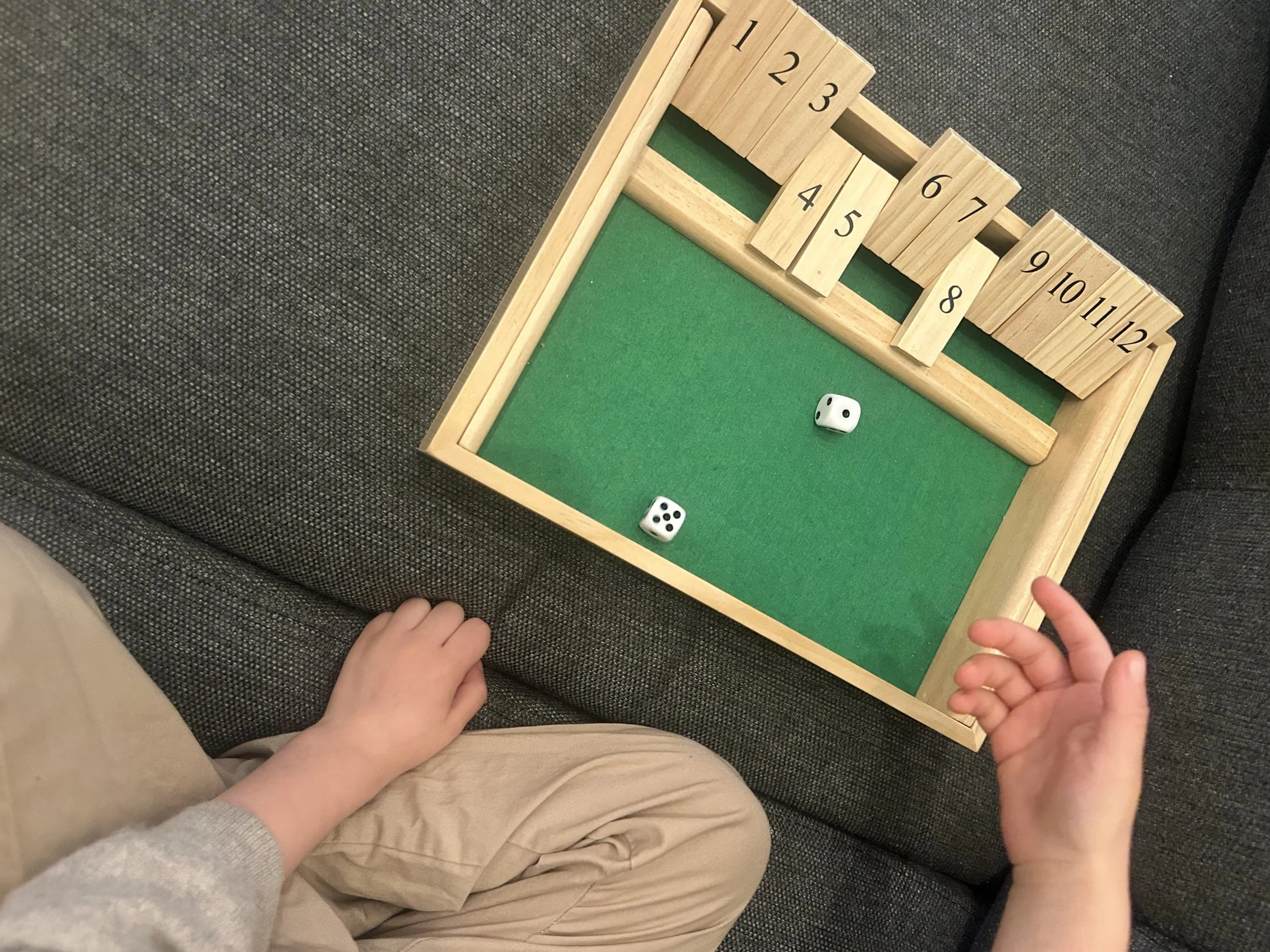
Shut the Box: Shut the Box is probably my favorite first-grade-level math game! My husband and I both love it as well and find it quite addictive. The board has 9 or 12 levers, depending on which you get. You roll two dice and can put down the lever of the sum you rolled or any other combination that makes that number. Children practice quick subitizing and adding with the dice and breaking up that number into its many combinations. You rarely win, which creates the addictive quality and practices frustration tolerance. This is such a great math game for a first grader.
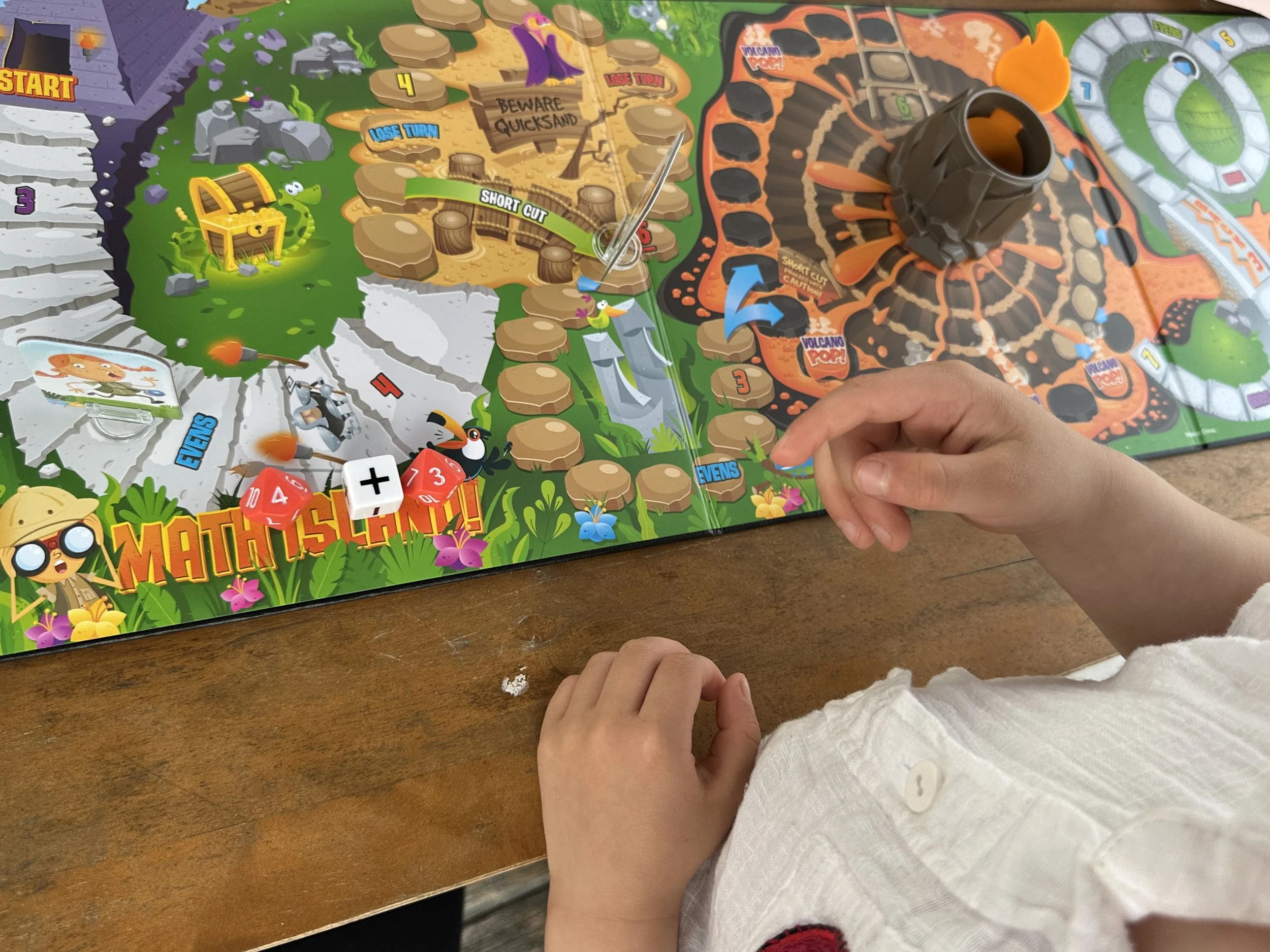
Math Island: This first-grade math game practices addition and subtraction with two ten-sided dice. Children move through the board, solving equations. There is an element of fun built into the volcano popping, and although technically it is a bad thing, my son always wants to get the volcano to pop!
I Sea 10: Being able to identify number bonds to ten is crucial to higher-level math. This first-grade-level math game is also good for a kindergartener who has some stronger mental math skills or is using a curriculum that emphasizes these number bonds. Players take turns flipping over tiles and looking for pairs or groups that add to ten. Practicing and gaining speed on this is so valuable.
ADSUMUDI Fun Ones: Like ADSUMUDI Little Ones, ADSUMUDI Fun Ones practices mental math, making a number using two other numbers. It still can be done with only the two basic operations (addition and subtraction), but it introduces some bigger numbers than in the intro level.
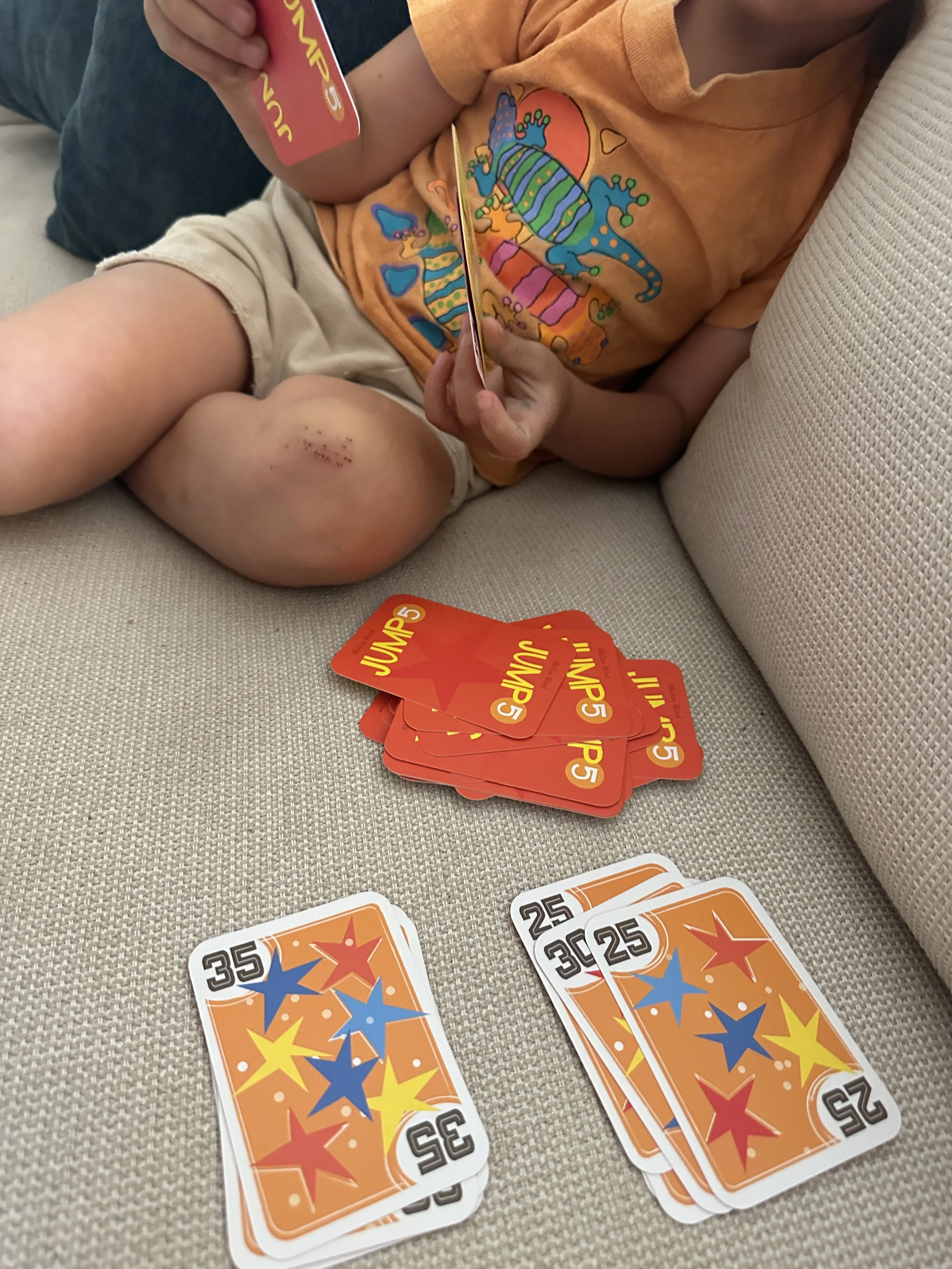
Jump 5 (and more!): This game works the same way as Jump 1, but practices skip counting by 5s. These aren’t the only two, either. They have options for skip counting up to 9. I particularly would recommend the 1s, 2s, and 5s, however. As your child gets confident with those, adding more levels is a great way to practice skip counting and get ready for multiplication. It is also the perfect on-the-go game.
Clumsy Thief in a Candy Shop: Clumsy Thief is one of our favorite math games. In first grade, your child may be ready for the candy shop or original versions. If they are still working on number bonds to 10, though, the junior version is a good option. In Clumsy Thief in a Candy Shop, players make stacks adding to 20. Throughout the game, players add more cards to each stack, practicing those number bonds. The original version is the same, but it works with 100 as the target number.
Dino Math Tracks: This game works on place value and is good for working on three-digit numbers with your first grader! It is simple to play, and my son really loves it. It is one of the very few games specifically focused on place value.
Pete the Cat Cool Cat Math Game: Some math games disguise the math portion more than others. This one does not disguise it much at all. For a more reluctant math student, this may not be the best match. But my son absolutely loved it, so I wanted to make sure to include it! This first-grade-level math game works on a large variety of first-grade math skills.
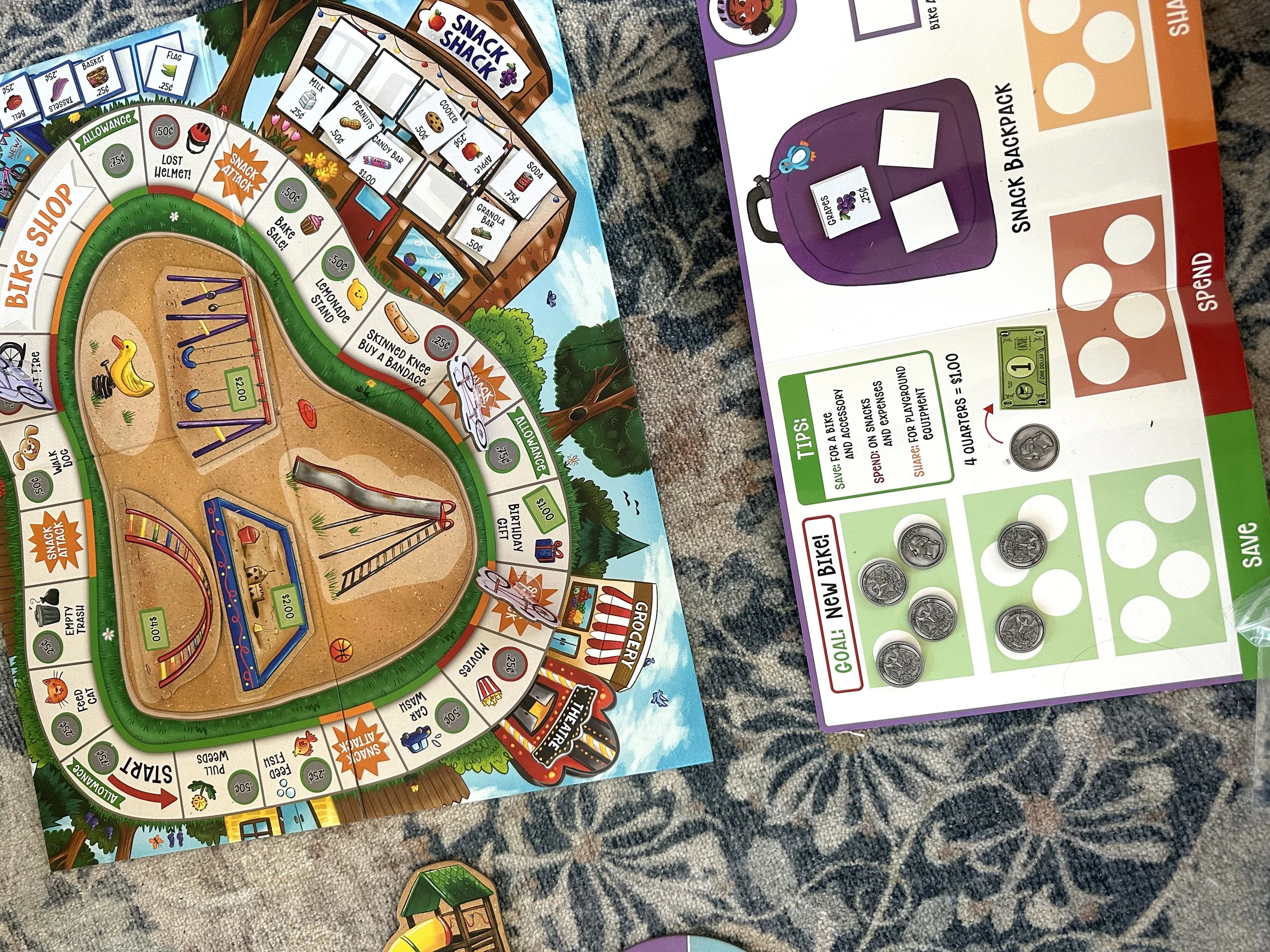
Money Bunch: This game works on understanding money. It focuses on quarters. Children need to combine quarters to make dollars to buy different items, saving up for a new bike. It is a good introduction to adding 25s as well.
Making Change: This money game works on mental subtraction and money. While some cards are fairly simple, many are much more complicated, making this a great game for first and second graders.